


Designing for the Senses: Why Texture Matters More Than You Think
When people talk about great design, they usually jump straight to color palettes, lighting tricks, or furniture placement. But there’s another layer that often goes unnoticed, the one you can’t quite name, but you can feel. That’s texture. It’s what makes a room feel welcoming, what draws your fingers to a piece of fabric or a wall finish, and what makes a sofa seem inviting before you’ve even sat down. Understanding the importance of texture in interior design helps explain why certain spaces feel instantly comfortable while others seem cold, even if they look beautiful.
In this blog, let’s talk about something that doesn’t always get the attention it deserves, and how it quietly shapes the way we connect with a space.
The Silent Language of Design
Texture communicates without a single word. It sets the emotional tone of a room before your mind starts naming colors or noticing shapes. When you step into a space, your eyes take in the layout first, but your body responds to texture almost instinctively. A smooth marble countertop feels crisp and cool. A woven rug softens the echo of footsteps. Even if you don’t consciously register it, your senses do.
Designers often describe texture as something that adds “depth,” but honestly, it’s more personal than that. It’s like a quiet emotional current that runs through a space. A room with only glossy finishes might look sharp in photos, but in real life, it can feel distant. Add in a soft throw, a grainy wall, or a rough-hewn wood accent, and suddenly it feels warmer, more human. Texture, in a way, becomes the emotional vocabulary of design, one of the most essential sensory design elements for homes that truly engage how we experience space.
How Texture Shapes Mood
The way something feels under your fingertips can change how you feel inside your head. That’s not poetic exaggeration, it’s sensory psychology.
Different textures bring out different emotional tones. This is where how texture enhances room aesthetics really comes to life. Luxury interiors often blend opposites: soft velvets with polished metals, raw stone with smooth leather. It’s that contrast that keeps things interesting.
- Soft textures, like velvet, chenille, or thick wool, create a sense of coziness. You can almost feel them inviting you to unwind.
- Rough textures, such as brick, linen, or unpolished wood, bring a raw, grounded vibe. They remind us of nature, of handmade beauty.
- Smooth and glossy textures, glass, lacquer, and polished marble, add brightness and a clean, contemporary edge.
- Layered combinations, a stone wall behind a plush sofa, or metal accents beside linen drapes, create that perfect visual and tactile balance.
The secret? Contrast. When surfaces complement each other rather than compete, a room gains rhythm. It feels alive instead of overdesigned.
Texture and Memory
Understanding the importance of texture in interior design goes beyond what meets the eye; it reaches into how we feel and what we remember. Here’s something most people overlook: our sense of touch is tied deeply to memory. What we touch, we tend to remember.
Ever brushed your fingers over a linen curtain and thought of a breezy summer afternoon? Or rested your hand on old wood that reminded you of your grandparents’ house? That’s texture doing its quiet, emotional work. It connects us to experiences, both past and present.
Designers often use this idea in sensory design elements for homes. A reclaimed wooden beam can make a modern apartment feel more grounded. A smooth metal railing can suggest progress and innovation. Good design, after all, isn’t just about impressing the eye; it’s about evoking feeling. Texture builds that bridge between familiarity and novelty, memory and now.
Bringing Texture into Interior Design
Here’s the good news: you don’t need to gut your house to bring in texture. Sometimes, small, thoughtful touches can shift the entire feel of a space.
When adding texture, balance matters. Too much variety can make things feel busy, while too little makes a room fall flat. It’s all about gentle contrast.
Try this:
- Mix fabrics – velvet cushions, linen curtains, wool rugs.
- Add natural elements – wood, stone, clay, rattan.
- Play with finishes – matte beside gloss, polished beside raw.
- Try textured walls – lime wash, subtle wallpaper, or rough plaster.
- Don’t forget the floor – a patterned rug can anchor everything beautifully.
Even minimal spaces benefit from one or two tactile pieces. A woven basket in a sleek white room, for example, can do wonders. That’s the quiet power of how texture enhances room aesthetics; it can shift the mood without shouting for attention.
Texture in Modern Minimalism
Minimalist design often gets mistaken for being cold or empty, but that’s only true when texture is missing. In minimal interiors, every surface tells part of the story.
Picture this: a soft linen sofa, a coarse clay vase, and a sisal rug sitting under clean white walls. Nothing loud or flashy, but together they create warmth. It’s proof that simplicity doesn’t have to mean sterility.
Texture is what keeps modern spaces from feeling lifeless. It’s the quiet layer that adds character and comfort, an essential part of sensory design elements for homes that aim for both calm and connection.
Lighting Meets Texture
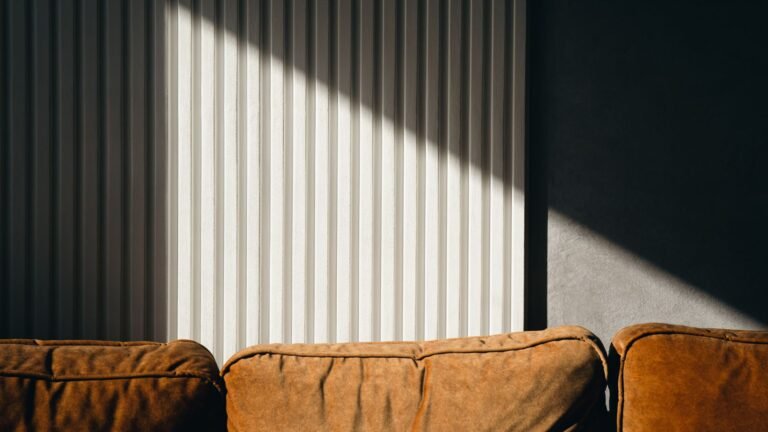
Texture doesn’t just sit there; it interacts with light. The way light touches a surface can completely change how it looks and feels.
Morning sunlight grazing a rough brick wall can make every groove pop with depth. In the evening, soft lamplight can make a velvet cushion glow like it’s alive. A good designer doesn’t just pick materials; they think about how light will move across them throughout the day.
- Side lighting highlights roughness and creates shadow play.
- Soft overhead lighting smooths things out for a calm effect.
- Warm bulbs bring natural materials to life, while cool lighting complements polished finishes.
Texture and light are partners. Together, they give spaces movement, the kind that makes you want to reach out and touch your surroundings.
Designing for All the Senses
True design isn’t only visual. It’s something you feel, hear, and sense around you. Texture doesn’t work in isolation; it teams up with sound, temperature, and even scent.
Soft fabrics absorb echoes. Hard surfaces bounce sound back. Rough finishes scatter light, while smooth ones focus it. When designers think about all of these together, the result feels intuitive. You might not notice why it feels right, you just know that it does.
That’s another layer of how texture enhances room aesthetics; it ties all the senses together. The best rooms don’t scream for attention; they feel natural, effortless, and somehow alive.
Conclusion
At its heart, design is about experience, not decoration. Texture is what transforms a structure into something you feel. It’s the difference between admiring a space and wanting to live in it.
When you understand the importance of texture in interior design, you start to see how it adds warmth, story, and depth to everything. Texture gives life to the surfaces around us and turns visual design into something tangible.
In a world where most of what we see exists on screens, real texture reminds us of what’s human and physical, the creak of wood, the softness of fabric, the feel of stone under your hand. That’s what stays with you. And that’s why, when it comes to great spaces, texture matters more than you think.
Recent Posts
-
Why Cushion Density Defines Comfort and Longevity in Luxury Furniture
-
The Aesthetics of Grain: Understanding How Wood Patterns Shape Visual Warmth
-
Designing for the Senses: Why Texture Matters More Than You Think
-
Materials Matter: Choosing Natural vs Engineered Wood for Luxury Furniture
-
How To Blend Traditional Craftsmanship With Modern Aesthetics